Best Mosquito Control for the Southeast: Yard Picks
July 15, 2026 · Regional Pest Guide Team · mosquito-control southeast
Southeast mosquito season runs from March through November across most of the region, and in Florida it rarely pauses. You are not managing a short summer nuisance. You are managing a nine-month pressure campaign from two species that require different approaches to mosquito control.
The Asian tiger mosquito (Aedes albopictus) bites all day, resting in shaded yard vegetation between meals. The Culex mosquito peaks at dusk and breeds in standing water ranging from gutters to plant saucers. A complete yard program layers an adulticide concentrate across your lawn and shrubs with a larvicide program targeting any still water on the property.
This guide covers yard treatments, not personal repellents. For wearable and spray-on options, see our mosquito repellent roundup.
This post contains affiliate links. If you buy through a link on this page, we may earn a commission at no extra cost to you. See our full disclosure policy.
What to Know Before You Buy
Southeast heat and humidity degrade most contact insecticides faster than the label implies. Manufacturers test residual times in temperate conditions; in the Southeast, plan on six to eight weeks per application instead of twelve. Follow product label instructions; some pesticides require restricted-use applicator licenses.
That reapplication schedule changes the value math. A concentrate that costs more upfront typically costs less per treatment than a ready-to-spray option at equivalent coverage, even accounting for the shortened window. The picks below weight that calculation.
For full yard coverage, pair an adulticide (kills adults on contact and on treated surfaces) with a larvicide (breaks the reproductive cycle in standing water before adults emerge). Using only one layer leaves the opposite species cycle intact.
Best Overall: Cutter Concentrate

Cutter’s concentrate kills adult mosquitoes on contact and leaves residual protection on treated foliage and surfaces. At the Southeast’s six- to eight-week reapplication schedule, the 2-pack lowers per- treatment cost well below ready-to-spray alternatives at the same coverage rate, making it the right starting point for most suburban lots.
Per-treatment cost math: Southeast yards need a minimum of six applications per season. At that rate, concentrate form cuts the cost per treatment roughly in half compared to equivalent ready-to-spray coverage. The 2-pack brings that math within reach for standard suburban lots without requiring bulk storage.
Bulk-buy option
| 2-Pack | Bulk Concentrate | |
|---|---|---|
| Best for | Lots up to 1/3 acre | Half-acre and larger |
| Typical season purchases | 4–6 | 2–3 |
| Per-treatment cost | Lower than RTU | Lowest in category |
For properties larger than a third of an acre,  Cutter Backyard Bug Control Spray Concentrate (3 Pack), Kills Mosquitoes, Fleas & Listed Ants, 32 fl Ounce — $24.10
cuts per-season costs further and reduces mid-season reorders. For
standard suburban yards the 2-pack stores more easily and avoids
committing to a larger volume before you know how the product performs on
your specific property.
Cutter Backyard Bug Control Spray Concentrate (3 Pack), Kills Mosquitoes, Fleas & Listed Ants, 32 fl Ounce — $24.10
cuts per-season costs further and reduces mid-season reorders. For
standard suburban yards the 2-pack stores more easily and avoids
committing to a larger volume before you know how the product performs on
your specific property.
Best Natural Option

Oil-based and botanical formulas are the right pick when you are treating near vegetable beds, pollinator gardens, or outdoor spaces where children and pets spend regular time. They kill adult mosquitoes on contact but break down faster than synthetic pyrethroids, so shorten the reapplication interval to three to four weeks during the July and August peak.
For low-impact control approaches that complement any yard spray program, see natural pest control methods.
Best Fogger
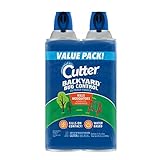 Cutter Backyard Bug Control Outdoor Fogger, Kills Mosquitoes, Fleas & Listed Ants, 16 Ounce, 2 Pack — $9.92
A fogger pushes insecticide into the tree canopy and shrub understory, reaching shaded resting spots where tiger mosquitoes wait through daylight hours. Use it the morning before an outdoor event, or to reduce a heavy infestation before starting a regular spray schedule.
Apply in early morning when wind is calm. The treated area clears in two to four hours, so fog early and let the space open before anyone arrives. A fogger provides fast knockdown but not the residual coverage a concentrate provides between applications.
Best Passive Protection
| [](https://www.amazon.com/dp/B09B1BP1JH?tag=regionalpestguide-20&linkCode=ogi&th=1&psc=1&utm_source=regional-pest-guide&utm_medium=blog&utm_campaign=best-mosquito-control-for-the-southeast-yard-picks) |
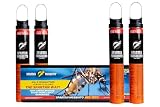
| **[Spartan Mosquito Pro Tech - 1 Acre Pack 4 Tubes | Outdoor Mosquito Repellent for Yard, Patio & Home | Natural Insect Killer & Bug Control Barrier](https://www.amazon.com/dp/B09B1BP1JH?tag=regionalpestguide-20&linkCode=ogi&th=1&psc=1&utm_source=regional-pest-guide&utm_medium=blog&utm_campaign=best-mosquito-control-for-the-southeast-yard-picks)** — $46.50 |
Passive traps and attractant devices run continuously between spray cycles, targeting dusk-active Culex mosquitoes rather than the daytime- biting tiger mosquito. They pair with a spray program rather than replacing it.
Place the unit at the yard’s perimeter, away from the area you want to protect. Drawing mosquitoes toward the trap means drawing them away from the patio. Running a passive trap through the full season reduces the population pressure each concentrate application has to handle and extends the effective window between treatments.
Best Larvicide: Summit Mosquito Bits
 SUMMIT CHEMICAL CO 117-6 30OZ Mosquito Bits — $14.97
Summit Mosquito Bits contain Bacillus thuringiensis israelensis (Bti), a naturally occurring bacterium that kills mosquito larvae in standing water without harming birds, fish, or garden insects. Bti is the preferred larval control method for yards with ornamental ponds, rain barrels, or any water feature you cannot drain.
Apply Bits to all standing water on the property: gutters, bird baths, tree holes, low spots in the lawn, plant saucers, and decorative ponds. In the Southeast, apply after any rain that exceeds half an inch. The Culex mosquito can complete a larval cycle in fresh standing water within four to seven days, so new breeding sites form quickly after heavy rain. Follow product label instructions; some pesticides require restricted-use applicator licenses.
Draining what you can is always the first step. Where draining is not practical, Bits give you a targeted solution that fits into any integrated yard program. A Southeast control plan that skips larvicide is leaving the Culex reproductive cycle untouched.
Best for Entry Points and Perimeters

A perimeter treatment along fence lines, foundation plantings, the underside of decks, and low-hanging border shrubs targets the resting zones where adult mosquitoes shelter between blood meals. Apply before the April surge and repeat every six weeks through October.
Perimeter and open-lawn applications overlap in coverage, closing the gaps that form as a single treatment area starts to wear down in heat and humidity.
Southeast Application Schedule for Mosquito Control
The Southeast season has a clear rhythm. Matching your application schedule to it gets more out of every product.
March
Start the larvicide program as daytime temperatures hold steadily above 50°F. Adult mosquitoes are not yet at full pressure, but larvae are developing in any standing water that accumulated over winter. Treating gutters, low spots, and ornamental features in March cuts the April adult surge before it builds.
April through June
Begin adulticide spraying once you see adult activity or daytime temperatures reach the mid-60s consistently. Spray the lawn perimeter, shrub borders, and shaded ground cover where tiger mosquitoes rest. Set up a passive trap at the yard’s edge by the first week of May.
July and August
Peak season. Reapply concentrate every six weeks, or immediately after any rain event over one inch. Check and retreat standing-water sites with larvicide after rain over half an inch. Skipping a reapplication cycle during this window has the most noticeable effect on yard pressure.
September through November
Mosquito pressure eases but does not stop. In Florida, coastal Georgia, and Louisiana, October can still run heavy. Continue treating until two consecutive weeks below 55°F bring adult activity down to a manageable level. Follow product label instructions; some pesticides require restricted-use applicator licenses.
For broader pest timing across the full calendar year, see our seasonal pest calendar.
Related Reading
🏡 More from EPM Labs:
- Lush Lawns — Complete lawn care guides
- Harvest Home Guides — Home gardening & harvest tips
- MowGuide — Mowing schedules & equipment reviews
- Gardening by Zone — Zone-specific planting guides
- LifeStarter — Life skills & adulting guides