Best Flea Treatment for West Coast Pets
November 24, 2026 · Regional Pest Guide Team · west-coast
Disclosure: This post contains affiliate links. As an Amazon Associate I earn from qualifying purchases. See our disclosure policy for details.
Confirm it is fleas before you treat
If you searched best flea treatment for home after a dog or cat in California, Oregon, or Washington started scratching, confirm fleas before you buy a spray. Scratching along the tail base, scabs, and pepper-like specks in the coat that smear red-brown on a damp paper towel are flea dirt, which is digested blood. Ankle bites on people often show up once adults leave the animal.
Adult fleas spend most of their time on the pet. Treating the animal is essential, and premises treatment done alongside pet treatment speeds control. A house spray used alone leaves adults on the dog or cat.
On the West Coast, pets pick fleas up in shade more than in open sun. University of Kentucky Entomology notes that immature fleas are unlikely to survive in full sun, so the ground under decks, the soil along fence lines, and the bedding in a doghouse are the outdoor spots that matter. An open, sunny lawn is not the first place to treat.
Treat the pet first
Ask a veterinarian to match a topical, an oral, or another vet-directed product to the animal’s species, age, and weight. Products containing permethrin or amitraz must never be applied to cats. Some flea products are not approved for puppies and kittens, so read the label and consult a veterinarian.
Never treat a pet with products made for carpets or yards. The indoor spray and powder later in this post stay on the premises. They do not replace a pet product your veterinarian approves.
Eggs already in the house still develop after the pet is treated. That is why prep and indoor products come next, used alongside the pet treatment rather than instead of it.
For steps that keep fleas off dogs and cats before an infestation builds, use the guide to flea prevention for pet owners. That is the pet-side page this roundup does not try to replace.
Prep the house before you spray or dust
University of Kentucky Entomology and UC IPM both put prep ahead of indoor application. Finish this sequence, then apply.
- Pick up items from floors.
- Remove pet dishes.
- Cover fish tanks.
- Wash pet bedding.
- Vacuum.
Flea pupae in their cocoons are not killed by insecticides, and vacuuming prompts them to emerge sooner into the treatment. Vacuum before you apply, and keep vacuuming after. Do not treat that later flush of adults as a reason to spray again the same week.
Then look for a product that combines an adult-flea insecticide with an insect growth regulator (IGR) such as methoprene or pyriproxyfen. Check the label for an insect growth regulator. The two indoor picks in the next section are sold for fleas in the house. Do not read those picks as already meeting the IGR recommendation.
People and pets should stay off treated surfaces until the spray dries, which may take a few hours. For powder, wait the dwell time on the label, then vacuum as directed.
Best flea treatment for home once the pet is covered
Two indoor products, two jobs. Use them as the labels describe for indoor fleas. When you apply either one, follow product label instructions; some pesticides require restricted-use applicator licenses. Check each label for an insect growth regulator such as methoprene or pyriproxyfen. Do not assume either pick includes one.
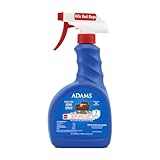
Indoor flea spray
Use this indoor flea spray on the premises, not on the pet.
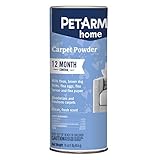
Carpet powder for indoor fleas
Use this carpet powder on the premises, not on the pet.
When fleas keep appearing after treatment
Do not re-treat right away when fleas keep showing up. UC IPM says fleas may emerge for up to 2 weeks after treatment and to keep vacuuming without reapplying pesticide. University of Kentucky Entomology says to expect some fleas for a few weeks or longer and consider re-treatment only if adults are still seen after 4 weeks.
Those are two separate windows, not one blended rule. UC IPM is the 2-week emergence period with vacuuming and no extra pesticide. Kentucky is the 4-week mark for considering another treatment if adults remain.
The adults you see in the first week can be fleas that vacuuming prompted out of cocoons. Insecticides do not kill pupae in those cocoons, so a few new adults are not, by themselves, a signal to spray again.
Total-release foggers are not recommended for fleas because they release upward and do not reach hidden areas where fleas develop. Skip the fogger. Keep vacuuming instead.
Shaded yard spots, not the whole lawn
Yard treatment is seldom needed for the whole yard. Treat shaded pet resting areas such as doghouses, fence lines, and under decks with a pyriproxyfen product diluted in water and applied by hose-end or pump sprayer. Skip full-sun areas, where immature fleas are unlikely to survive.
Do this after the pet and the house, and only in the shade the animal actually uses. You do not need to wet the sunny middle of the lawn.
Questions West Coast pet owners ask
Can I put a house spray or powder on the pet?
No. Never treat a pet with products made for carpets or yards. Ask a veterinarian for a topical, an oral, or another vet-directed product labeled for that animal.
Why are fleas still here after I treated?
Flea pupae in their cocoons are not killed by insecticides. Adults can keep emerging after you spray. UC IPM puts that emergence at up to 2 weeks. Kentucky says some fleas can appear for a few weeks or longer. Keep vacuuming. Do not reapply pesticide the next day because you still see a flea.
Where should I go for a generic house roundup?
If you want a generic best flea treatment for home list, without this West Coast pet-first order, go to the flea treatment products guide. This page stays on pets in California, Oregon, and Washington, then the indoor follow-up.
What if I am not on the West Coast?
A parallel pet-then-home plan for a different climate is the guide to best flea treatments for Southeast pets and homes through winter.
🏡 More from EPM Labs:
- Lush Lawns — Complete lawn care guides
- Harvest Home Guides — Home gardening & harvest tips
- MowGuide — Mowing schedules & equipment reviews
- Gardening by Zone — Zone-specific planting guides
- LifeStarter — Life skills & adulting guides