Best Fire Ant Killer for the Southeast
November 06, 2026 · Regional Pest Guide Team · southeast ants
Disclosure: This post contains affiliate links. As an Amazon Associate I earn from qualifying purchases. See our disclosure policy for details.
Red imported fire ants build loose, dome-shaped mounds in open lawn, along sidewalk edges, and near irrigation heads. Step on one and workers boil out fast; the sting leaves a white pustule within a day. If you are matching that pattern across a Georgia, Alabama, Mississippi, Louisiana, or Florida yard, you are dealing with fire ants, not a sugar-trail kitchen species. For broader ant biology and treatment framing, see the ants pest profile. For product context beyond fire ants alone, the general best ant killer products roundup covers household and yard options side by side.
Why fire ants hit Southeast yards harder
The Southeast gives fire ants a long warm season, mild winters, and frequent rain that keeps soil workable for nest expansion. Colonies stay active more months of the year than they do farther north, so a treated mound can be replaced by a satellite nest before you notice the first one is gone.
Sandy and sandy-loam lawns common across the Coastal Plain drain well enough that shallow nests establish quickly after mowing or irrigation cycles. Open turf, playground edges, and the strip between driveway and foundation are preferred sites because sun warms the mound. Clay pockets hold moisture after summer storms; fire ants still nest there, often under thatch or at the base of landscape beds.
Multiple queens and budding colonies are routine in this region. Killing workers on the surface without reaching the queen leaves brood and remaining queens free to rebuild. That is why Southeast control plans usually pair a mound treatment for what you can see with a broadcast bait for what you cannot.
A separate state-by-state overview lives in the fire ants in the South guide if you want pressure patterns beyond product choice.
Fire ant bait vs. contact killers
Contact killers and drenches act on ants that walk through treated granules or liquid at the mound. They are the right tool when you need a visible nest knocked down before a cookout, a kids’ game, or lawn work. Speed is the point: several labeled mound products begin working within an hour once ants contact the active material.
Baits work differently. Workers carry the bait particles into the nest and share them through the colony, including with the queen and brood. Kill is slower to appear on the surface, often measured in days rather than minutes, but the goal is colony collapse rather than a temporary clear zone around one mound. Broadcast baits also pick up small or hidden nests you never marked with a flag.
A practical Southeast split looks like this. Treat every mound you can find with a contact or dual-action mound product the same morning you walk the yard. Then broadcast bait across the lawn so foraging workers from untreated nests pick it up. Skip bait on wet grass or when heavy rain is due; soaked particles lose attractiveness and wash off target.
Do not mix products in the same spreader pass unless the labels say that combination is allowed. Apply each product at the rate on its own label, and follow product label instructions; some pesticides require restricted-use applicator licenses.
Top fire ant killers by job: mounds, broadcast bait, large lots
Match the product to the job: single mounds you can stand over, whole-lawn baiting, or wide coverage on a larger property. Place each pick with the card below; rates, personal protective equipment, and re-entry timing stay on the label.
Mound knockdown
When a mound sits in a high-traffic strip and you need ants down the same day, a dry mound treatment that needs no watering-in keeps the job simple. Sprinkle the labeled amount over the mound and a small ring around it; ants contact the granules as they move.
| [](https://www.amazon.com/dp/B071S2T4YW?tag=regionalpestguide-20&linkCode=ogi&th=1&psc=1&utm_source=regional-pest-guide&utm_medium=blog&utm_campaign=best-fire-ant-killer-for-the-southeast) **[Ortho Orthene Fire Ant Killer1, 12 oz (2-Pack), 680g | Outdoor Ant Killer, Kills the Queen, No Watering Needed, Begins Working in 60 minutes](https://www.amazon.com/dp/B071S2T4YW?tag=regionalpestguide-20&linkCode=ogi&th=1&psc=1&utm_source=regional-pest-guide&utm_medium=blog&utm_campaign=best-fire-ant-killer-for-the-southeast)** ($19.97) |
For nests that may have satellite chambers off the main dome, a dual-action mound granule targets workers you see and foragers moving between connected nests. Apply when ants are active and the ground is dry, typically early morning or late afternoon in Southeast heat.
| [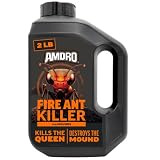](https://www.amazon.com/dp/B002FYMTB2?tag=regionalpestguide-20&linkCode=ogi&th=1&psc=1&utm_source=regional-pest-guide&utm_medium=blog&utm_campaign=best-fire-ant-killer-for-the-southeast) **[Amdro Fire Ant Killer for Mounds, 2 Lb | Dual-Action Fire Ant Killer Granules, Targets Visible and Hidden Mounds, Kills Imported and Native Fire Ants](https://www.amazon.com/dp/B002FYMTB2?tag=regionalpestguide-20&linkCode=ogi&th=1&psc=1&utm_source=regional-pest-guide&utm_medium=blog&utm_campaign=best-fire-ant-killer-for-the-southeast)** ($21.47) |
Walk the yard after the first treatment day and mark any new domes that surface. Fresh mounds along the same irrigation line often mean a colony that had already split; hit those on the next dry morning rather than waiting for a full rebroadcast cycle.
Broadcast bait for lawn-wide pressure
Once mounds are treated, a ready-to-use fire ant bait applied with a broadcast spreader covers turf you cannot inspect mound by mound. It targets existing mounds and is labeled to prevent new ones for up to three months when used as directed. Load the spreader dry, walk a steady pattern, and keep bait off hard surfaces where it will not be foraged.
| [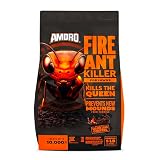](https://www.amazon.com/dp/B00FN3GOX6?tag=regionalpestguide-20&linkCode=ogi&th=1&psc=1&utm_source=regional-pest-guide&utm_medium=blog&utm_campaign=best-fire-ant-killer-for-the-southeast) **[Amdro Fire Ant Killer, Ant Killer for Lawns, 5 LB | Ready to Use Fire Ant Bait, No Mixing, Targets Existing Mounds, up to 3 Months of Control](https://www.amazon.com/dp/B00FN3GOX6?tag=regionalpestguide-20&linkCode=ogi&th=1&psc=1&utm_source=regional-pest-guide&utm_medium=blog&utm_campaign=best-fire-ant-killer-for-the-southeast)** ($24.74) |
If treated yards still push new mounds within a few weeks, step up to a colony-focused bait labeled for broadcast or mound use and for all life stages. Fast colony control in the 24–72 hour window matters when reinfestation follows a neighbor’s untreated lot or a shared fence line.
 Syngenta - A20380A - Advion Fire Ant Bait - Insecticide - 2lb ($47.95)
Bait only when foragers are out. Midday summer pavement heat drives workers deep; dawn and dusk passes put particles where ants actually collect food. Hold off if the forecast shows a soaking rain inside a day.
Large-lot granules
Bigger lawns and open side yards burn through small bottles quickly. A larger bag of yard-protection granules labeled to kill the queen and colony, stop new mound formation, and hold control up to three months covers more ground per bag on lawns and along the foundation. Start kill is listed in minutes when ants contact the treatment.
| [](https://www.amazon.com/dp/B018N8241S?tag=regionalpestguide-20&linkCode=ogi&th=1&psc=1&utm_source=regional-pest-guide&utm_medium=blog&utm_campaign=best-fire-ant-killer-for-the-southeast) **[Spectracide Fire Ant Shield Yard Protection Granules 10 Pounds | Kills Fire Ant Queen & Colony, Kills Mound & New Mound Formation, Use On Lawns & Near Home Foundation, Up To 3 Months Control](https://www.amazon.com/dp/B018N8241S?tag=regionalpestguide-20&linkCode=ogi&th=1&psc=1&utm_source=regional-pest-guide&utm_medium=blog&utm_campaign=best-fire-ant-killer-for-the-southeast)** ($16.89) |
Use the bag rate for your square footage; stretching a light pass to “finish the back corner” under-doses the edge where mounds often restart. Keep granules out of storm drains and off blooms where pollinators are working.
Timing and safety on Southeast lawns
Fire ant foraging in the Southeast peaks when soil is warm and moisture is moderate. Early morning and late afternoon applications line up with worker traffic better than noon treatments on bare dirt. After a multi-day rain, wait until the surface dries so granules stay put and baits remain attractive.
Winter is not a full off-season on the Gulf and Florida peninsula. Mild stretches bring workers up; a warm February week is enough for new mounds on south-facing lawns. Farther north in the region, late fall baiting still helps before cold slows the colony, and spring mound walks should start as soon as soil temperatures climb and domes reappear.
Safety is non-negotiable around kids, pets, and vegetable beds. Read the label for each product before you open the seal: outdoor-only limits, distance from edible plants, watering rules, and how long people and animals stay off the treated area. Store unused product locked and dry. If a nest sits inside a structural wall, under a concrete slab, or in a spot you cannot treat without drift onto water, stop and hire a licensed applicator rather than forcing a lawn product indoors.
Re-check the yard two weeks after a full mound-plus-bait pass. New domes get spot treatment; a clean lawn gets noted on the calendar so the next broadcast lands before summer peak, not after the first barefoot sting of the season.
🏡 More from EPM Labs:
- Lush Lawns — Complete lawn care guides
- Harvest Home Guides — Home gardening & harvest tips
- MowGuide — Mowing schedules & equipment reviews
- Gardening by Zone — Zone-specific planting guides
- LifeStarter — Life skills & adulting guides