Best Ant Killer for Home & Yard: Top Picks for 2026
July 27, 2026 · Regional Pest Guide Team · pest-control ants
Ant colonies are patient. By the time you see a trail crossing the kitchen counter or a mound spreading in the lawn, the colony has been established long enough to number in the thousands. The encouraging reality is that the right ant killer, matched to the ant species and the situation, can eliminate the colony rather than simply displacing foragers temporarily.
The picks below cover four situations: best overall control, yard and perimeter treatment, indoor bait stations, and a natural option for sensitive areas. Regional notes follow the product sections, because fire ant timing in Texas and the Gulf Coast states looks nothing like a carpenter ant spring in New England.
This post contains affiliate links. As an Amazon Associate, Regional Pest Guide earns from qualifying purchases at no extra cost to you. See our disclosure policy for details.
Best Overall Ant Killer
 Amdro 100550427 Ant Killer for Outdoor Home Perimeter 24 oz, Black Label — $17.97
Slow-acting bait is the most reliable method for colony-level control. Workers carry the bait back to the nest and share it with larvae and the queen. Once the queen is affected, the colony collapses and foragers stop appearing within days to a few weeks depending on colony size. The top overall pick works across the widest range of ant species found in U.S. homes, including odorous house ants, pavement ants, and Argentine ants.
Place bait directly on active ant trails rather than in open areas where forager traffic is low. Avoid applying a contact spray near active bait stations: killing foragers on the trail before they return to the nest prevents the bait from reaching the colony.
Best Ant Killers for Yard and Perimeter
Outdoor ant pressure divides into two distinct situations: perimeter trails leading toward the house and active mounds in the yard. These call for different product formats.
Best for Perimeter and Smaller Properties
 Amdro Ant Killer for Outdoor Home Perimeter, 12oz — $10.09
A broadcast granule applied around the foundation and along fence lines stops foragers before they reach entry points. This bag size suits a standard suburban lot. Spread in a band around the perimeter and water lightly after application; moisture releases the active ingredient at the soil surface where ants forage.
Best for Mound Treatment
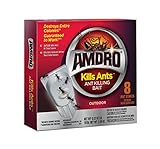 Amdro Kills Ants Stakes 8 Pack — $10.97
Mound stakes are more precise than broadcast granules. A stake placed near an active mound allows the active ingredient to migrate through the colony’s tunnel network, reaching workers and the queen without spreading product across the surrounding lawn. Stakes are the better choice near garden beds, play equipment, or anywhere a targeted application is preferable to broader broadcast coverage.
For regional timing on fire ant treatment by state, including which seasons give the deepest access to colonies, see Fire Ants in the South: A State Guide.
Best Indoor Bait Stations
 Combat Max Ant Killing Bait Stations, Indoor and Outdoor Use, 6 Count — $4.97
Enclosed bait stations are the safest indoor format. The bait sits inside a child-resistant housing that allows ants to enter and exit while keeping hands, paws, and young children out of contact with the active ingredient. Place stations along baseboards and under appliances where you have seen trails. The same product is available in a larger multi-pack for whole-house coverage or treating multiple rooms.
Do not apply a contact spray near active stations. Killing foragers on the trail before they return to the nest prevents the bait from reaching the colony, which defeats the purpose of the bait entirely.
Best Natural Option

Diatomaceous earth and plant-oil-based baits are worth considering when you want to avoid synthetic insecticides near food-preparation surfaces or around pets. Natural options work more slowly than conventional baits and need reapplication after cleaning or rain. They perform best in lower-pressure situations or alongside conventional treatment in specific sensitive areas. For a broader look at when non-synthetic approaches fit and when they fall short, see Natural Pest Control Methods.
Regional Notes
Ant species and their peak activity windows vary considerably by region. The same product applied at the same time of year can produce very different results depending on where you live.
Southern states (Texas, Florida, Gulf Coast, Southeast): Fire ants are the dominant outdoor threat. They nest in open, sunny ground and mounds can appear rapidly after rain soaks the soil. Broadcast granule and mound stake treatments penetrate most effectively when soil temperatures are moderate: spring (March through May) and fall (September through October) are the most productive treatment windows. Ghost ants, common in south Florida, trail through any small gap in the structure; bait at entry points outperforms contact spray for this species.
Northeast and Mid-Atlantic: Carpenter ants are the spring intruder most homeowners mistake for termites. They excavate wood to create galleries rather than eat it, so a colony inside a wall void can go undetected through an entire season. If you are seeing large black ants near baseboards or window frames in May or June, read Carpenter Ants vs. Termites before selecting a bait formula. Protein-based bait is the correct type for carpenter ants; sugar-based bait, which suits pavement ants and odorous house ants, will be ignored. Pavement ants, the small dark species that push up soil between sidewalk cracks, respond well to the broad-spectrum baits in this roundup.
Midwest: Odorous house ants and pavement ants are the most common indoor intruders. Both respond to slow-acting sugar-based bait. Treating in April, when colonies are expanding and foragers are highly active, gives bait time to collapse the colony before summer population peaks in June and July.
Pacific Northwest: Odorous house ants thrive in the damp conditions common west of the Cascades. Bait handles the active colony. Pairing treatment with structural fixes around pipes and window frames addresses the moisture conditions that will keep rebuilding pressure if left in place.
What to Know Before You Buy
Follow product label instructions; some pesticides require restricted-use applicator licenses. When applying any pesticide indoors or outdoors, read the full label before use. Licensing requirements vary by state and by product formulation. Check your state’s requirements before purchasing if you have any questions about use restrictions.
Identify the species before choosing a formula. Protein-based baits attract fire ants and carpenter ants. Sugar-based baits attract odorous house ants and pavement ants. The wrong type will be ignored by foragers. If you are unsure which species you have, place a small amount of each bait type near a visible trail and observe which draws traffic within 30 minutes.
Bait eliminates colonies; sprays eliminate individuals. Contact spray kills what it touches. Bait works by slow-action poisoning that the ant carries back and shares throughout the nest. A repellent spray applied on an active trail disrupts foraging and prevents bait from reaching the colony. Use them in sequence: spray to block entry points while bait is working, but not on the foraging trail itself.
Placement determines outcome as much as product choice. Apply bait on active trails, not in open spaces. Water granules lightly after spreading to activate the ingredient at soil level. Mound treatments work best when colonies are near the surface, typically in cooler morning hours or shortly after rain.
For a coordinated approach that layers bait, barriers, and structural exclusion, see Ant Control Strategies.
🏡 More from EPM Labs:
- Lush Lawns — Complete lawn care guides
- Harvest Home Guides — Home gardening & harvest tips
- MowGuide — Mowing schedules & equipment reviews
- Gardening by Zone — Zone-specific planting guides
- LifeStarter — Life skills & adulting guides