Best Yellow Jacket Spray for Late-Season Northeast Nests
September 11, 2026 · Regional Pest Guide Team · northeast wasps
Identifying a Yellow Jacket Nest Before You Treat It
Yellow jackets build two kinds of nests, and knowing which one you have changes how you treat it. Ground nests show up as a steady stream of insects entering and leaving a hole in a lawn, under a shed, or inside a stone wall gap. Aerial nests are the gray, papery, football-shaped structures hanging under eaves, in shrubs, or inside wall voids with a single visible entry point.
Signs you’re dealing with an active nest, not just foraging workers, include:
- A visible entrance hole with insects coming and going every few seconds
- A gray papery nest structure you can see from a few feet away
- Heavy traffic around outdoor trash cans, soda cans, or fallen fruit
Yellow jackets are often confused with paper wasps and hornets. Paper wasps build small, open-comb umbrella nests and are generally less defensive. Hornets build larger aerial nests and are less common in most Northeast yards. Yellow jackets are the ones most likely to sting in numbers when a nest is disturbed, and by late summer that nest is at its largest and most defensive point of the year.
Why Northeast Yellow Jackets Get More Aggressive in September and October
A yellow jacket colony grows all summer, and by early fall a nest that started with one queen in May can hold several thousand workers. Late in the season, the queen stops laying new brood, and the colony shifts from raising young to foraging for sugar instead of protein. That’s why yellow jackets swarm picnics, trash cans, and fallen apples so aggressively in September: the food they were feeding to larvae is gone, and workers go looking for it themselves.
This is also the most defensive point in the colony’s life cycle. Worker numbers are at their peak, and the entire nest will die off naturally after the first hard frost. In the weeks before that frost, though, sting risk is higher than at any other point in the year, which is exactly the window this guide covers.
When to Treat Yellow Jackets Before the First Frost
Treat a nest in the evening, after dark if possible, when workers have returned for the night and activity outside the nest has dropped off. Cooler evening temperatures also make the colony less responsive, which means a lower chance of a mass defensive response while you’re applying product.
Don’t wait for the first frost to do the job for you. A hard freeze kills the colony, but a nest near a doorway, deck, or high-traffic path is a sting risk right up until that happens, and an unusually mild fall can push that date later than you’d expect. If you’ve confirmed an active nest within a few feet of where people walk, treat it rather than wait it out.
Best Insecticide for Wasps: What Actually Kills Yellow Jacket Nests
For aerial nests, look for an aerosol spray labeled for wasps and hornets with a jet stream of 15 feet or more. That distance matters: it lets you treat the entrance from well outside the colony’s defensive range instead of standing directly underneath it.
For ground nests, a dust formulation works better than a liquid spray. Dust clings to the tunnel walls and gets carried deeper into the nest by returning workers, which liquid sprays often can’t reach. Avoid foggers or bug bombs for either nest type; they’re built for enclosed indoor spaces, not an outdoor colony with multiple exit points.
Disclosure: this post contains Amazon affiliate links. As an Amazon Associate, we earn from qualifying purchases at no extra cost to you.
If you’re facing more than one active nest before frost, [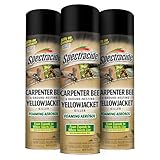](https://www.amazon.com/dp/B0GGJK5YQX?tag=regionalpestguide-20&linkCode=ogi&th=1&psc=1&utm_source=regional-pest-guide&utm_medium=blog&utm_campaign=best-yellow-jacket-killers-for-late-season-northeast-nests)
**[Spectracide Carpenter Bee & Gound-Nesting Yellowjacket Killer 16 Oz, 3 Pack](https://www.amazon.com/dp/B0GGJK5YQX?tag=regionalpestguide-20&linkCode=ogi&th=1&psc=1&utm_source=regional-pest-guide&utm_medium=blog&utm_campaign=best-yellow-jacket-killers-for-late-season-northeast-nests)** — $17.33
gives you enough product to treat several sites without running out
partway through. For a single confirmed nest, [](https://www.amazon.com/dp/B007HBKSI4?tag=regionalpestguide-20&linkCode=ogi&th=1&psc=1&utm_source=regional-pest-guide&utm_medium=blog&utm_campaign=best-yellow-jacket-killers-for-late-season-northeast-nests)
**[Spectracide Carpenter Bee & Gound-Nesting Yellowjacket Killer, 16 Oz](https://www.amazon.com/dp/B007HBKSI4?tag=regionalpestguide-20&linkCode=ogi&th=1&psc=1&utm_source=regional-pest-guide&utm_medium=blog&utm_campaign=best-yellow-jacket-killers-for-late-season-northeast-nests)** — $6.99 is
sized for a one-time job and easier to store afterward than a larger can.
Applying Yellow Jacket Spray Safely
- Wear long sleeves, pants tucked into socks, and closed shoes; yellow jackets target exposed skin first.
- Identify your retreat path before you start. Don’t spray with your back to a fence, a dead end, or anything else that slows you down.
- Stand upwind of the nest entrance so drifting spray doesn’t blow back toward you.
- Apply at dusk or after dark, and if you need light, use a red-filtered flashlight rather than a white beam pointed at the entrance. Yellow jackets are less responsive to red light.
- Don’t seal a ground nest entrance immediately after treating it. Give the product time to work through the colony first.
Follow product label instructions; some pesticides require restricted-use applicator licenses. That applies to any wasp and hornet product, not just the ones linked above, and it’s worth reading before you buy rather than after.
After the Nest Is Gone: What to Watch For as Temperatures Drop
Check the nest site again after two or three days. Continued activity means the colony wasn’t fully treated and needs a second application. Once activity has stopped, a ground nest entrance can be filled in, and an aerial nest can be removed and discarded.
The same frost that ends a yellow jacket colony also pushes mice and other rodents to start looking for a way indoors, so late September is a good time to check your foundation and garage seals while you’re already thinking about pest pressure. Our fall pest prevention checklist covers that transition region by region, and our guide to rodent repellents for fall is a reasonable next stop if you’re closing up a house for the season. If this is your first time dealing with a nest and you’d rather start with a gentler approach before reaching for a stronger product, our overview on how to get rid of wasps safely covers early-season removal steps, and our broader roundup of wasp and hornet control products compares options beyond the two picks above.
Treating a nest now, while it’s cooler and workers are winding down, is easier and safer than waiting for a warm afternoon when the colony is at full defensive strength.
🏡 More from EPM Labs:
- Lush Lawns — Complete lawn care guides
- Harvest Home Guides — Home gardening & harvest tips
- MowGuide — Mowing schedules & equipment reviews
- Gardening by Zone — Zone-specific planting guides
- LifeStarter — Life skills & adulting guides